
SONIC GOVERNANCE FOR MOBILITY SYSTEMS
Visuals are governed. Sound isn't.
Across passenger information, announcements, cues, interfaces, vehicles, stations, terminals and AI, one audible system already exists.
Sonic Governance makes the decisions shaping it deliberate, coherent, and accountable.
From noise to signal.
SONIC GOVERNANCE
THE SYSTEM ALREADY EXISTS
One audible system.
Many decisions.
Every voice, cue, piece of music, announcement, interface, environment, and AI interaction contributes to what people hear from an organisation.
Those decisions are often spread across teams, suppliers, technologies, and moments in time.
Without a shared governing logic, the system still exists. It simply becomes harder to keep coherent.
SOUND HAS CONSEQUENCE
What people hear shapes what happens next.
) Action
Help people understand what is happening and what to do next.
) Recognition
Make the organisation recognisable without making every moment sound the same.
) Deserved Trust
Make competent, honest, accessible, and accountable conduct easier to perceive.
SONIC GOVERNANCE
Govern the whole.
Sonic Governance is the organisational discipline for deciding how sound is chosen, used, changed, evaluated, and held accountable across an organisation over time.
It connects decisions across voice, cues, music, atmosphere, services, interfaces, environments, communications, and AI.
Human need first. What must hold stays clear. What may move can adapt.
SONIC GOVERNANCE ADVISORY
From isolated decisions to governed practice.
Every engagement starts with a focused Sonic Governance Diagnostic.
It establishes where sound has consequence, what is already working, where responsibility is unclear, and what the situation justifies.
From there, SIGNAL is applied only as far as necessary.
SELECTED CLIENTS











MOBILITY SYSTEMS
Many audible decisions. One human journey.
Public transport brings together safety, accessibility, orientation, identity, operations, technology, language, and service across environments that are constantly changing.
Sonic Governance gives those decisions one governing logic.
EVIDENCE IN PRACTICE
A governed system holds over time.
Wiener Linien
The work extended from strategy and architecture through implementation and long-term evolution across announcements, voices, gongs, functional sounds, and silence.
The aim was not a collection of isolated sounds. It was a coherent system that could work across real passenger situations, technologies, and operational conditions.
Internal passenger reporting recorded satisfaction with announcements at 66 per cent before deployment and 79 per cent after deployment. The result is treated as evidence within a wider service system, not as proof of sole causation.
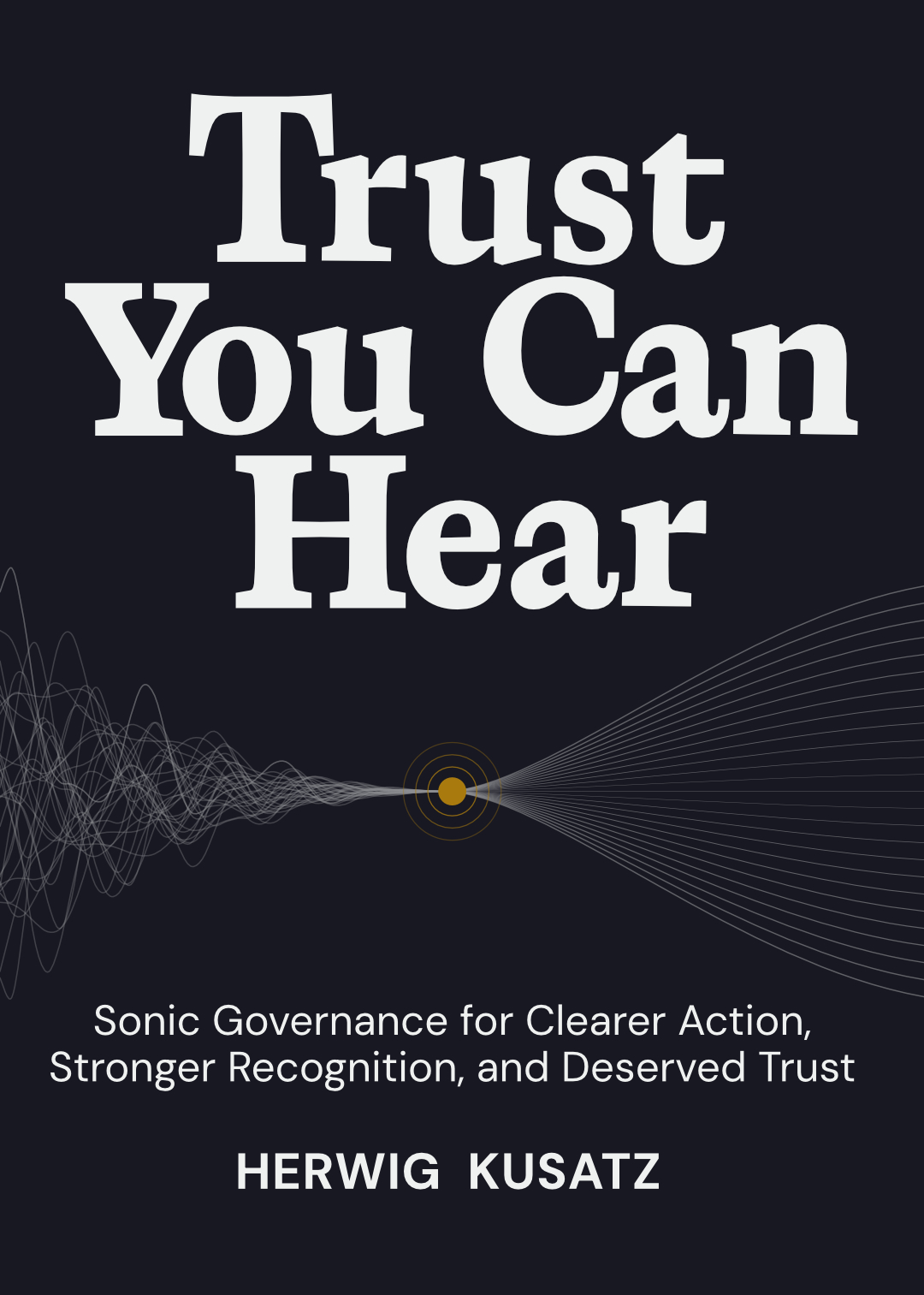
TRUST YOU CAN HEAR
The discipline behind the practice
Trust You Can Hear develops the principles behind Sonic Governance and examines how organisations can govern sound for clearer action, stronger recognition, and deserved trust.
It treats sound as an organisational responsibility, not a collection of assets.
"It is worth listening more closely to what organisations already communicate through sound, intentionally or not, and considering the responsibility that comes with it."
Hannes Raffaseder
SELECTED RECOGNITION



HERWIG KUSATZ
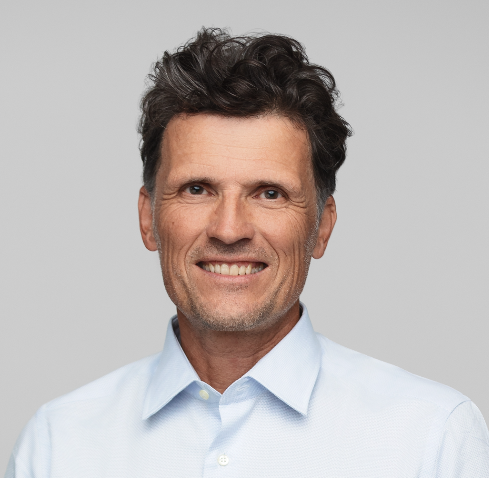
Sonic Governance Advisor
Herwig Kusatz is the founder of Sound Strategy ))) and author of Trust You Can Hear.
For more than two decades, he has worked where strategy, sound, and organisational decision-making meet. His work includes Wiener Linien, ÖBB, and adidas.
He taught at university for eight years, has received six International Sound Awards, and has served four times as an international jury member.
If sound has consequence, who is accountable for it?
START A CONVERSATION
Where does sound have consequence in your organisation?
You do not need to know the solution before we speak.
A first conversation can establish whether a focused Sonic Governance Diagnostic is justified, what it should cover, and who needs to be involved.
Terms • Privacy • Imprint • Resources